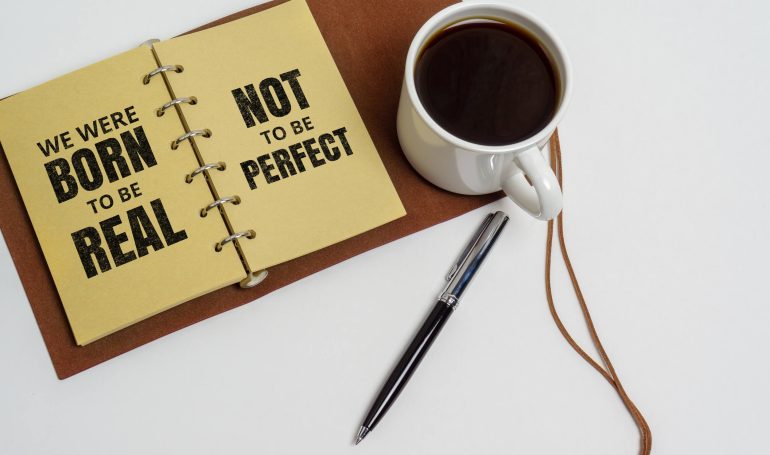
Perfection
Some of you know I am a big fan of pro football. I’ve watched the Dallas Cowboys storm the field for as long as I can remember. One of my earliest memories was watching the Cowboys beat the Miami Dolphins in Super Bowl VII back in 1972, with Roger Staubach leading the Team to victory. I was only seven years old at the time, but I can still remember the energy in the room.
I may not recall the plays or stats, but I can still see my older cousins, uncles, and grandfather yelling at the TV. Every time a play went right, there was cheering, clapping, and high-fives. But when the defense got the better of Staubach, there was yelling, groaning, and full-body frustration.
Like most sports fans, my family wanted to see their team as perfect—perfect throws, perfect catches, perfect execution. But here’s the truth: there is no such thing as perfect.
As Vince Lombardi said, “Perfection is not attainable, but if we chase perfection, we can catch excellence.”
Last night, I was watching the second season of the Netflix series Quarterback, and Kirk Cousins quoted Lombardi while reflecting on his own gameplay. That moment hit me. Because no human on the planet is perfect. We might think we are, but no life, no relationship, no journey is perfect. We are all a work in progress.
Vince summed it up well. Striving for perfection can make us better, sharpen our skills, and bring out our excellence. And yes, if I’m about to have brain surgery, I absolutely want the surgeon to strive for precision, detail, and the best possible outcome.
But perfectionism can also hide fear. The fear of putting yourself out there. The fear of being seen. The fear of rejection, judgment, or being hurt. Sometimes, perfectionism keeps us in a loop of “still working on it” so we never have to release it into the world. If no one sees it, they can’t judge it. We can’t fail.
However, the truth is that we’ve already lost because we never even tried. Trying — even just showing up— is more than half a success. Parents think they need to be perfect, but that is not true; most of the time, all you have to do is show up. Be there, be present. That is excellence.
There is no perfect job. The job you need right now is the one that will come to you. That job will teach you what you need to learn so you’re ready for the next one. In that way, it becomes the perfect fit for this season of your life.
And how many times have you heard someone say, “I’m looking for the perfect man/woman”? There is no such thing. And let’s be honest, the person doing the seeking isn’t perfect either. You don’t want perfection; you want the right match for you. The one who challenges you, supports you, sees you, and grows with you. The one who sees you at your worst, who still loves you and wants to be with you. The one who wants to be by your side and walk through all of life’s challenges with you. The one you feel safe with… vulnerable and exposed… no masks, no performance, just you. The one who makes you a better person with them than without them. That is what makes a partner perfect for you.
Where Perfectionism Begins and How It Harms Us
Perfectionism doesn’t just appear overnight. It’s created over time, shaped by childhood experiences, generational patterns, and emotional wounds. Somewhere along the way, many of us got the message, spoken or unspoken, that love, approval, or safety had to be earned.
Perhaps you were only praised or noticed when you achieved something. Maybe love felt conditional, based on how well you performed, behaved, or looked. Perhaps someone you admired demanded perfection and didn’t tolerate mistakes. So you learned to strive, to fix, to overachieve. You learned that being “good” meant being perfect or at least appearing to be.
For many, perfectionism is rooted in a childhood where things felt out of control. Maybe the adults in your life were unpredictable. Maybe your home didn’t feel safe or stable. So you learned to control what you could. You cleaned your room just right. You followed the rules. You tried to be the good kid, the high achiever, the fixer. It became your survival strategy. If everything looked perfect on the outside, maybe it would feel safe on the inside. But what helped you cope as a child can become a heavy burden as an adult. That need to control turns inward and outward. You try to control how others see you, how your life unfolds, even how you feel. And underneath it all is a scared child who just wants to feel safe and loved.
The problem? That need to control everything creates a lot of anxiety. When we believe we’re responsible for holding it all together, there’s no room for error or space to breathe. We become hyper aware, constantly scanning for what could go wrong. We can’t relax, because deep down, we don’t trust that things will work out unless we manage every detail. It’s exhausting. And it keeps us in a loop of tension, perfectionism, and self-pressure.
Sometimes perfectionism disguises itself in logic. You tell yourself, “I’ll start dating once I’m in perfect health or hit my goal weight.” Or “I’ll think about love after I get a new job.” But what if that perfect-fit partner is the one who helps elevate your health because now your heart is open and your energy is flowing again? And if you’re unhappy at work, could it be that you’re unfulfilled in other areas too? Maybe you’ve poured all your time, energy, and attention into your job because deep down, you haven’t allowed yourself to receive love. You’ve convinced yourself that everything else needs to be perfect first. But maybe love is the missing piece that changes everything.
Perfectionism tells us that we are worthy only when everything is in order. When we look the part. When we have it all together. It creates constant pressure to prove and perform. And when we inevitably fall short because we’re human, it triggers shame, guilt, or self-criticism.
It disconnects us from our bodies, as we’re always preoccupied with our thoughts, evaluating and judging. It keeps us out of the present moment because we’re either obsessing over the past or anxious about what could go wrong in the future. It robs us of joy, creativity, and connection because we’re too busy trying to be enough instead of simply being.
Real transformation doesn’t happen in perfection; it occurs in presence when we stop pretending. When we start allowing. When we show up messy, honest, and open.
Setting Yourself Free
Perfectionism is like a prison. It looks polished on the outside, but inside it keeps you locked away, guarding every word, every action, every part of you that feels too messy or too real. It holds you hostage with fear, shame, and the lie that you are not enough.
But here’s the truth: the door isn’t locked. You can set yourself free. You don’t have to earn love, prove your worth, or hold it all together alone. Sometimes the balls that you are juggling in the air need to fall to the ground. That way, you can pick up the ones you truly want and put them in a new order and walk away from those that no longer serve and support you.
Let’s strive to be the excellent version of ourselves. Let’s love who we are, including our imperfections. As John Legend says in his song, “love all your curves and all your edges, all your perfect imperfections.”
You are already worthy. Already lovable. Already enough.